How using and making playful pluriversal design artefacts might act as an engine for change and knowledge production.
5.1Introduction
In this chapter I present the creative outputs of this research and the audiences each is designed for. They are the swans that have grown from the ugly ducklings of Chapter 4, the reflections tied to single moments, hatched into once the patterns that recurred across the series took material form. The chapter argues that the creative outputs produced across this course of study are themselves sites of knowledge generation, the tangible ongoing evidence of a practice that resists neat categorisation. Where Chapter 4 traced what happened in the practice, here I detail the convivial tools (Illich, 1973; Voinea, 2018) I designed to empower others to create transformative, community-driven learning spaces.
I treat the Neurodiversity Playbook, SEAT framework, exercises and materials described below as epistemic tools: they reveal tacit processes and simultaneously create new evidence of change through use, surfacing new thinking and sending it across into practice.
See the creative artefactThe Neurodiversity Playbook
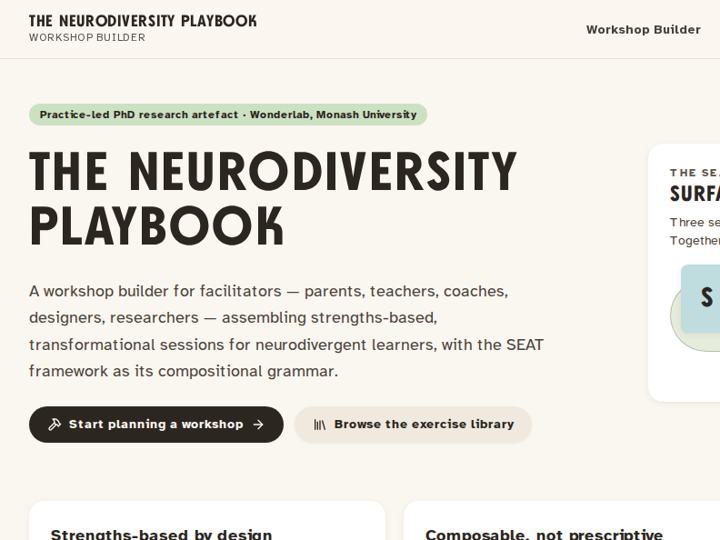
Exercises, materials and a workshop builder for the community of care, structured by SEAT.
See the creative artefactThe SEAT framework
Surfacing, Envisaging, Actioning, Togethering: the structuring logic of the Playbook and its workshop builder.
See SEAT in the PlaybookSEAT in actionBuild a workshop with it
As in Chapter 4, reflective notes are labelled as practice stories, impact sightlines or theoretical grounding, so that the different registers of praxis stay visible.
5.1.1What Did Transformation Look Like in This Practice?
Chapter 3 established the goal of the learner defining success by their own standards. This section asks the companion question, what did transformation actually look like as the practice unfolded, and on what timescales did it surface?
Transformation here doesn’t mean the eradication of negative learning experiences nor the removal of all negative self-perception or critique. Rather, it looks like a reappraisal of how neurodivergent learners relate to their prior deficit narrative. By having the agency, energy, and materials to respond to new contexts without automatically applying a critical narrative of themselves, new possibilities are opened to find joy and autonomy. At a comfortable right distancedness from yourself, your challenges and your place in the world, you can reconcile yourself to reality and move beyond sense-making to transformation of self as a wider political act (Arendt, 1994; Ayduk & Kross, 2010; Biesta, 2016).
What I design are the spaces, materials, and instruments that allow transformation to take place: the scaffolding, in the fullest sense of that word, rather than the change delivered. Transformation belongs to the learner and unfolds on their timescale. What a designer can claim is quality of conditions.
[IMPACT SIGHTLINE] One student appeared to have a hostile reaction during the first workshop reflection, but was extremely complimentary during the third workshop, almost two months later. When asked, they couldn’t pinpoint exactly when the shift had taken place, but rather it had grown on them slowly as they connected ideas from the workshop to experiences, they were having in their life. This shows, I think, that transformation is not an event but a condition that develops through repeated contact between workshop ideas and lived experience.
These shifts certainly don’t present identically amongst the panoply of participants. I have found it hard to always determine how much an exercise or workshop has connected with the group and have required follow-up discussions with participants and feedback from parents and teachers to shed light on what shifts have actually taken place. I’ve noticed that some shifts happen during the workshop, and for others, they emerge far later either when they relate something in the workshops to an educational experience they’ve had or as they continue to use the artefacts and materials of the workshop in their everyday life.
[THEORETICAL GROUNDING] This slow-burn temporality of change aligns with the transtheoretical model’s stages of change (Raihan & Cogburn, 2025), where movement between precontemplation and action is neither linear nor uniformly paced. It also resonates with Mezirow’s observation that perspective transformation often requires a period of gestation before a disorienting dilemma resolves into a new frame of reference (Mezirow, 1997). From a crip time perspective (Kafer, 2013), the insistence on normative schedules of progress, where change should be visible within a single session or semester, is itself an ableist temporal expectation. Neurodivergent learners may operate on temporalities that resist institutional timetables, and workshop design must accommodate this.
Mapped against those stages, this work concentrates its effort where neurodivergent learners are most often stranded: the movement out of precontemplation, where change is not yet imaginable, and through contemplation, where it is imaginable but not yet actionable. Surfacing and envisaging do their work across these two stages; actioning reaches into preparation and action; and togethering, with the commitment devices, tends to maintenance. The framework’s centre of gravity, though, sits early, because that is where the boundary before uptake lives.
5.1.2Pluriversal and Rhizomatic Outputs
The needs of a neurodivergent cohort of learners are varied, as I could observe in the workshops. In fact, they are often so varied, due to the heterogeneity of neurodivergence, that they can be antithetical to one another. For example, the novelty of an exercise or artefact that might be needed for a student with ADHD/VAST (Variable Attention Stimulus Trait) to remain engaged might preclude the sensory restraint someone seeks if they have ASD and are experiencing sensory overload (Belek, 2019). The progressive reveal of materials offered novelty and curiosity for participants that needed it, while reducing sensory and cognitive load for those who were sensitive to overwhelm.
As a result, in this work I decided to design each workshop as one of many possible permutations, varying qualities that include length, medium, social format, difficulty, degree of empowerment, and the need for previous experience of introspection. These variable qualities draw from my own experience and from dialogue with my community of practice, and the capacity and resources of whoever facilitates the exercises must be weighed alongside them.
For example, the Neurodiversity Playbook offers an overlapping smorgasbord of exercises, conceptual shifts across different modalities, that attempts to meet the depth and variety needed within the community. The underlying structure of surfacing and envisaging, actioning and togethering remains the mechanism through which I aim to achieve change.
One benefit of divisible exercises inside a wider framework is that they can be experimented on, expanded, or used individually within the facilitation or learning practices of those who adopt the playbook. The structure of the playbook is not just pluriversal (Escobar, 2017), it is rhizomatic (Deleuze & Guattari, 1987).
Rhizomatic, in Gilles Deleuze and Félix Guattari’s (1987) botanical figure, describes growth without a central root or governing hierarchy: any node can connect to any other, and the structure spreads horizontally, regrowing from wherever a piece is taken up. For the playbook this means avoiding a dependence on a beginning, spine, or sequence. Facilitators can enter anywhere and take what serves their room; what they take up takes root and regrows in their practice.
The aim is for strategies and concepts to spread as far and wide as possible, re-contextualised by the approaches of others (Jamaludin & Hung, 2016). It actively resists a hierarchical model of learning, moving away from prescriptive manuals and encouraging dynamic, non-linear trajectories for engagement. This structure aligns with connectivist theory, where knowledge is networked, and learning is defined as the process of forming, growing, and navigating these networks, focusing on the capacity to know more rather than the current state of knowing (Downes, 2008; Duke et al., 2013; Siemens, 2005).
This orientation positions the playbook as a set of convivial tools to become part of the facilitators and participant’s extended cognitive network, where human and non-human elements come together to form new assemblages (Adkins, 2015; Deleuze & Guattari, 1987), potentially increasing the wider community’s agency and creativity (Haraway, 2003).
Other creative outputs share these qualities. Neurodiversity.tools is rhizomatic by construction: its many-to-many ontology means there is no trunk, no prescribed entry point, and no correct path; a learner can arrive through a cognition, an extension, a strategy, or a specific tool and travel outward from any of them. It is pluriversal in refusing diagnosis as its organising category, meeting each learner in the shape of their own cognition instead. The materials carry the same logic at smaller scale: variants, blank stickers, and adaptable canvases assume from the start that no single form will fit the room.
See the creative artefactThe Neurodiversity Tools Database
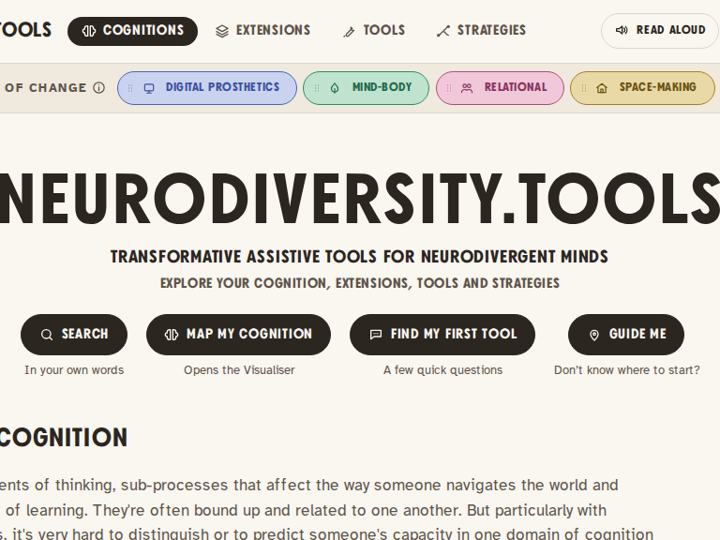
A browsable database of tools, extensions and strategies, organised by the part of thinking they carry, with examples and advice.
5.1.3Who Are the Creative Outputs For?
The creative outputs of this research have been produced for two primary audiences:
First, The Community of Experience: the neurodivergent learners themselves.
Second, The Community of Care: teachers, facilitators, parents, and other space makers.
The two audiences are distinguished because their needs diverge so significantly. It’s worth noting here, however, that the central animating community that this research serves is the Community of Experience, with the Community of Care seeking to create environments in which shift work can take place and learner agency can be encouraged.
The Community of Experience is served through outputs that prioritise mindset shift and psychological scaffolding with minimal friction and low activation costs. These outputs are tactile, intuitive, and pluriversal. Some of these tools need to extend beyond an individual workshop and act as reminders to encourage experimental discovery; detailed descriptions follow in the sections below.
The Community of Care, however, needs customisable, flexible resources that lower the burden required to produce pluriversal, transformational learning environments. This looks like adaptable ways of sorting through the array of exercises and other materials of the workshops to be able to produce clear, actionable plans that conform to the learners in the room. Table 5.1 pairs each output with the community it serves.
Community of Experience
| Output | What it does |
|---|---|
| Neurodiversity.tools | A digital library of instruments of change including digital prosthetics, reflective, relational and space making interventions that can be filtered, explored, experimented with and returned to at the learner’s own pace. |
| Visual, Physical and Perceptual Reflective Materials | A collection of objects, metaphors and concepts to reimagine and extend learners’ sense of self. |
| Commitment devices | Tangible aide-mémoires to reinforce, remind and aid learners as they take shifts and new stories about themselves out into the world. |
Community of Care
| Output | What it does |
|---|---|
| The SEAT framework | A structure that employs an adapted transformational and transtheoretical model of change (Grocott, 2022; Raihan & Cogburn, 2025) to build compelling pluriversal workshops aimed at neurodivergent learners. |
| The Neurodiversity Playbook | A collection of exercises with detailed facilitation notes, instructions, and suggested variants that can be used both to sort and select exercises. |
| Materials and other ephemera | The things that allow the workshops and their exercises to run smoothly and aid in the production of personalised commitment devices and aide-mémoires. |
On Establishing a Reciprocal Exchange Between the Designer and the Community of Neurodivergent Participants
In spite of my desire to co-develop and co-learn with participants, collapsing the power hierarchy as far as possible, the burden of organising and designing the sequencing and materials of the workshop was mine as the designer. For me, co-design is both a practical and ethical imperative. As a result, I tried to develop the workshops in such a way that I could learn with and as part of a community of neurodivergent learners without foisting unnecessary labour on the participants. Additionally, I had in mind that neurodivergent learners often have a particular resistance to authority and so sometimes seek to re-establish control over spaces in which they have been historically mistreated (Armstrong, 2010; Auzoult, 2015; Borsotti et al., 2024).
As both the neurodiversity literature and my own practice attest, neurodivergent learners often need activation energy from others to be spurred into action. First-hand accounts of autistic inertia describe intentions that cannot be enacted without external prompting (Buckle et al., 2021). Initiating shift work can be particularly draining (Bochman & Kroth, 2010). The workshops recorded the same pattern in participants’ own words: “I find it incredibly difficult to use new software or materials without being prompted to, or without having access to somebody helping me with it. ”A key design move is to share organisational and administrative work with willing members of the community of care, so uptake is not dependent on already-overtaxed learners who are quite rationally inattentive (Jones et al., 2024). I wished to offer an experience that was novel and sufficiently engaging that people were willing to accept this support.
Practically, as I adapted learnings from the workshops into the playbook, I moved the logistics from my hands into the community of care. In the workshop series the labour was mine, recruiting, preparing and pacing materials, holding space and sensibilities in place. The playbook redistributes it. Step-by-step instructions smooth out the logistics, material lists reduce prep times, and ready-made facilitator scripts lower the threshold for adoption, so the burden a workshop once placed on a single person, and might otherwise fall on the learners themselves, is carried instead by the teachers, facilitators, and parents the playbook equips.
5.2For the Community of Experience (Neurodivergent Learners)
The outputs in this section are for the Community of Experience. They need to communicate that this space is distinct from the normative or diagnostic spaces many neurodivergent learners have encountered before, and to travel beyond the workshop into everyday life without friction.
5.2.1Neurodiversity.Tools
Neurodiversity.Tools is a database of extensions that span all the instruments of change rather than the singular domain of assistive technologies. The value of this kind of catalogue resides not in the person or the database alone, but in the networked, relational connections that emerge as learners engage in self-discovery and experiment with these instruments of change. Rather than rely on medicalised language around diagnosis and disability, this database employs the language of cognitions, which I describe as components of thinking that affect the way someone inhabits the world and engages in the process of learning. By moving away from diagnostic and ableist language, we encourage a strengths-based view of cognition, which tangibly makes engagement, and uptake, more likely. The library’s semantic ontology and search functions are designed to resist a universal one-size-fits-all approach, allowing learners to navigate and find tools on their own terms, reflecting the pluriversal needs of the neurodivergent community.
See the creative artefactThe four instruments of change
Digital prosthetics, mind-body strategies, relational practices and space-making: the four directions a learner's instruments of change can take, and the four rooms of the database.
[PRACTICE STORY] This database started with my own personal collection of tools I’ve tested and researched to use for myself and for other students and academics that I’ve tutored or worked with. It has expanded and remained relevant in this work because of how excited I noticed it made participants. Every workshop I’ve run as part of this PhD where the database has been brought up has ended with people coming up to me asking to tell them exactly what the domain name is, to explain how I put it together, how I select things. It is fabulously exciting for me too, and drives me to keep improving the ways I work and extend myself. It can also be a scaffold that is poorly met by an advertising-fuelled web run by a few hegemons whose surveillance-driven business models treat attention as the product (Zuboff, 2019; Doctorow, 2021) and whose tools fail the convivial test Illich sets, that a tool serves purposes chosen by its user.
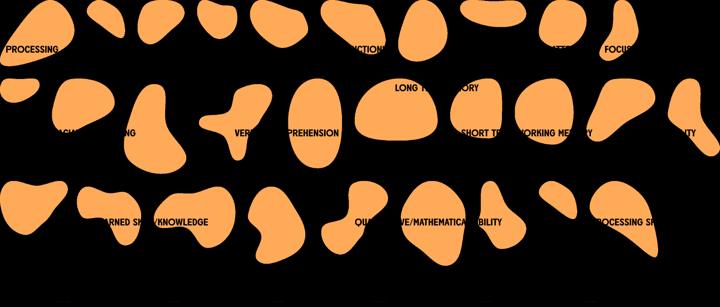
The database organises instruments of change through a semantic ontology of four nested layers (cognitions, extensions, tools, strategies), crossed by the four directions of the instruments of change framework. A single instrument of change could be a digital prosthetic tool like Session that incorporates the Pomodoro Technique, or a relational or introspective strategy like mindfulness enabled by a meditation app. The ontology allows for a trans-scalar approach for learners to find their way to, through, or between instruments of change from multiple vantage points and entry points, depending on the layer of their cognition they’re working with. Table 5.2 sets out the layers and the lens that crosses them; Figure 5.1 draws them.
| Layer | What it names | What it lets a learner do |
|---|---|---|
| Cognitions | Components of thinking that are often bound up and related to one another, but whose relations are sometimes quite hard to predict, particularly with neurodivergent learners. | Subdividing them is useful because it is difficult to predict someone’s capacity in one domain of cognition by referencing directly to another. Depicting them separately gives a more accurate picture of self, and invites experimentation with domain-specific instruments of change. |
| Extension Areas | Categories of tools and strategies that aid particular parts of everyday life and learning. They take the elements of cognition and expand and direct them towards actual elements of self-extension. | Transfer that cognition area over to an assistive tool and an extended digital space, often to free up the mind to do more of what it’s best at. |
| Instruments of change (a lens across every layer) | A way of categorising interventions into cognition into four directions (digital prosthetics, mind-body strategies, relational instruments, space-making), operating as a cross-cutting lens over the whole ontology rather than as a single layer within it. Every entry in the database belongs to at least one direction. | Filtering by direction lets a learner move between registers of support, from a piece of software to a breathing practice to a way of arranging a room, without leaving the cognition they are working on. |
| Strategies | The underlying methods that one or more tools utilise to extend cognition. | If a tool stops working well, compare it with other tools that utilise the same strategy to take a step sideways, or try different tools that utilise very different strategies to shift approach entirely. |
| Tools | Very specific software, objects, or techniques. For this database I research and select tools individually, testing a number of different tools in a given extension areas to work out which perform best in terms of style, function, features, price and platform. | Choose from the broadest possible spread of personalised recommendations, weighing cost (free or paid), platform and style. |
An example, told through the ontology: focus is the type of cognition; time sensing and attention anchoring are the type of extensions directed at it; Session is a tool inside those extensions, a digital prosthetic; and Session utilises two strategies, the Pomodoro Technique, a mind-body strategy for pacing attention, and ambient soundscaping, a form of space-making. Another tool, Endel, shares the ambient-music strategy but not the Pomodoro structure, and has quite a different space-making temperament. Depending on the style of your cognition, you might find one or the other works for you, which is why the database provides both rather than a single universal recommendation, and why strategies are catalogued separately: when a tool stops serving, the strategy shows you where to step sideways.
As different instruments of change are surfaced through the database, they can either be stacked together, layering on top of one another, building depth or redundancy within a single domain of cognition, or bundled across domains of cognition. This bundling is a kind of capacity transference, part of an ongoing, expanding practice of self-extension, constantly additive and in flux.
One idea I hold as my own working aphorism is that flux is the system. Neurodivergent learners can often rely on novelty-seeking and creative inquiry to provide motivation to try new things. If you lean into that sensibility, you can find joy and value in the process of regularly adapting to new conditions, discarding the old, and making new discoveries while in contact with the new. This system is built to support iterative and ongoing discards and discoveries through its multiplicity of options within each category.
In many ways, the database is built to offer support to the learner long after a workshop experience has ended. Each listing in the database has examples and specific advice that I’ve written, a kind of editorial layer on top of the raw descriptions of the tools. This editorial voice binds the database entries back to the workshop experience and to the wider strengths-based orientation of the research. This kind of artefact is a practical path to enable real transformation after the researchers have packed up and gone home and the real difficulties of life are left to be ameliorated by new neurodivergent communities, independently.
5.2.2Visual, Physical and Perceptual Materials
Each workshop activity can also be understood by the materials that helped to activate the exercise. I use ‘materials’ here to describe the different entry points I developed to invite participants into the workshop’s concepts and physical artefacts, and their own bodily experience. These materials animate different qualities and components of self-understanding and change through visual, physical and perceptual registers. They are embodied, tactile, and immediate. They work because they bypass the cognitive front door, offering learners a felt experience of concepts like perspective shift, incremental progress, or oppositional defiance before those concepts are named. In this research, they take three forms: visual materials that reframe thinking through concepts and metaphors, physical embodied exercises that create a felt sense of perspective shift, and perceptual materials that use magic and puzzles to create joy in uncertainty. The following examples differentiate how plural forms of engagement show up in the workshop materials.
Perspective Circles and Wrist Twist
Two brief embodied exercises anchor key concepts early in a workshop, and both are written up as cards in the Playbook. In perspective circles, a finger circling clockwise above the sight line is seen to turn anticlockwise once it drops below the eyes, though the muscles never change direction: a felt metaphor for the power of shifting perspective, and a non-confrontational way to experience mindset shift. In the wrist twist, a palm that cannot be turned over in one move flips easily in two: an embodied case for step-by-step incremental progress, and for stacking shifts and instruments of change on top of one another.
See the creative artefactPerspective Circles, Wrist Twist and the Clasping Trick
Brief exercises that give a felt sense of perspective shift in the body.
Rattleback
The Rattleback is a sculptural curio that spins smoothly one way and, spun the other, wobbles and reverts. In the workshops it makes visible a story of oppositional defiance: the trait so often observed when a neurodivergent learner is forced against their own direction, where external momentum without buy-in produces dissatisfaction or outright rebellion. In hand, it argues for working with a learner’s momentum rather than against it, and it doubles as a fidget object.
See the creative artefactRattleback
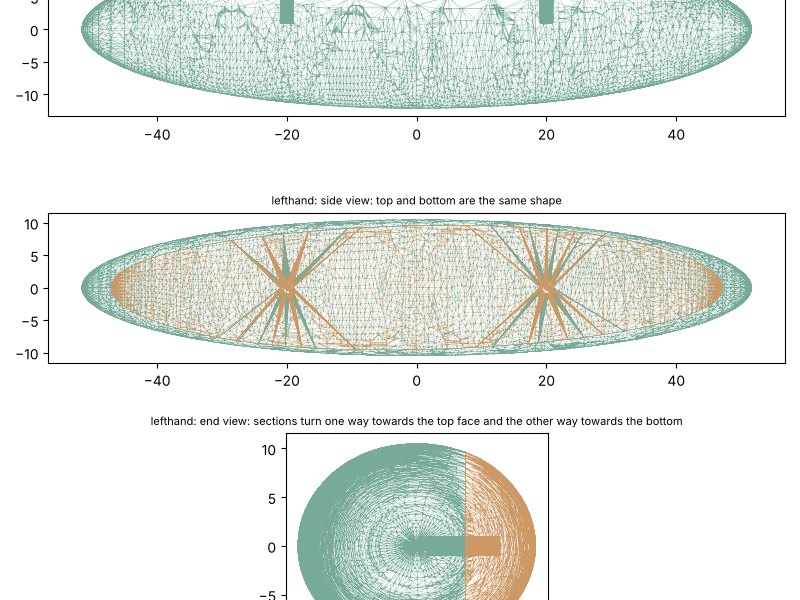
Spins smoothly one way and, spun the other, wobbles and reverts. A 3D-printable file is on the outputs page.
Columbus Egg
The Columbus Egg is a spheroid that, spun quickly, lifts itself upright; I use a 3D-printed one as a visual locus, and there is delight in the room whenever someone discovers how it works and shows another. It carries three playful metaphors: that stability comes through momentum and transformation rather than the status quo; that a learner can invert from a feeling of failure into clarity and a recognition of their own value, even where others do not see it; and that creativity can arrive as a bolt from the blue. The physics and provenance of both objects are on the website.
See the creative artefactColumbus Egg
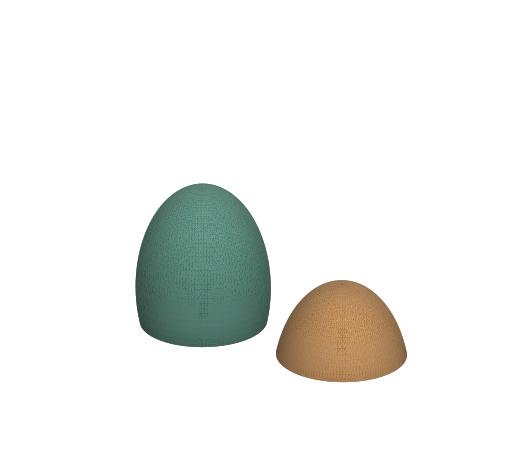
A spheroid that, spun quickly, lifts itself upright. A 3D-printable file is on the outputs page.
[PRACTICE STORY] This reminds me of my experience of learning to read. When I was in grade four, I couldn’t read at all. They had three or four shelves of books, each a different complexity, and I was always on the bottom shelf. Then within two weeks I dashed from the bottom shelf to the top. It was neurodevelopmental: my reading ability wasn’t there until suddenly it was. I’d been pushing at a locked door again and again until one day it startlingly unlocked and I just walked through. For me, I tried to ameliorate, brute-force and sidestep certain things for so long, and suddenly I could leapfrog them. This sudden rush of realisation of the light is one that helped me maintain belief that there would be a way through academia, through this project, and through all my learning generally. To me, the Columbus Egg encapsulates this sensation and helps me communicate it more viscerally, more experientially, and more effectively than prose.
5.2.3Commitment Devices and Reflective Materials
The materials described in this section might do double duty. They can be used during workshops to help scaffold learning, with the addition of prompts and multiple ways into the material through diagrams, visuals, tactile engagement, and writing. They might also serve a purpose beyond the workshop when they are kept by the participants. In many cases participants described their subsequent function as a kind of merch, an ongoing consumable material that continues to live and be used outside of the workshops. These tangible takeaways act as boundary objects, the concept Chapter 2 introduced through Fox (2011) and Star and Griesemer (1989). I go a step further and name them praxis objects made objects that bridge theoretical ideas into practice while functioning as tangible, sensory tools for engagement. A praxis object is both a conceptual anchor and a physical fidget tool, lowering the cognitive burden of introspection by giving the learner something to hold while they think. What this coinage claims, and the subtype that sits alongside it, is taken up in Chapter 6. The materials are robust enough to maintain their meaning across different contexts, travelling from the specific workshop environment into the learner’s everyday life, embedding a mindset shift. They may scaffold repeated self-directed recurring introspection, reinforce and maintain existing change, and offer a path to return to the self.
Puzzle Boxes
I have a collection of Japanese puzzle boxes that I used across this research, so frequently that I have designed a series of 3D printable versions at much lower cost, although the intricate and artisanal details are somewhat diminished. The boxes are often the first thing I use when I start the workshops built from this research. I lay them out as people come to sit down or enter the room, and that way there’s immediately something for them to engage with and for us to chat about. They act as tactile prompts for reflection, offering learners something to fiddle with, concentrate on, and access metaphors of transformation through play, manipulation, and material engagement.
See the creative artefactJapanese puzzle boxes
Boxes that look alike from the outside and open by different methods: a metaphor for invisible difference.
The puzzle boxes are used as a visual metaphor to communicate the principle that people might look similar from the outside but might have different methods for being unlocked and transformed. They can stand for invisible disabilities or visible difficulties and strengths, for unexpected complexity, and for delight in navigating uncertainty. They embody interior cognitive processes in material forms.
Posters
The posters are typographic design pieces that simulate components of the experience of being neurodivergent drawn from my own personal experience and in dialogue with other design precedents like Sam Barclay’s (2019) book, I wonder what it’s like to be dyslexic. Using design principles, the posters make visible and communicable experiences that are often interior and invisible. For participants, they attempt to offer another way to communicate their experiences to one another and outwardly, providing a language beyond words for something they may have struggled to articulate. More broadly, the posters act as boundary objects, making interior cognitive experiences legible and shareable for the Community of Care, who might not otherwise have insight into them. I use these posters on my slides during the workshops and risograph prints form a creative output I hope future participants will be able to take with them.
See the creative artefactThe posters
Typographic and risograph posters that reframe focus, overwhelm, reading, spelling and the neurowiggly shape.
Feeling Stickers
The feeling stickers do this double duty most clearly. I often give participants a second set for them to use in their everyday life, and in the case of this workshop series, they did. When I returned for the third workshop, weeks later, I saw these feelings mapped across their whole lives.
See the creative artefactFeelings stickers
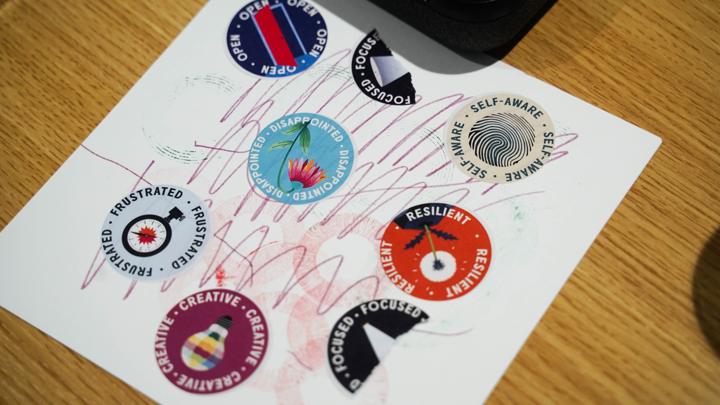
Round stickers, each carrying a feeling word in its design, used in the room and kept afterwards. They are also offered in the margin of this edition.
[IMPACT SIGHTLINE] Three sticker uses really stood out to me. One was a participant who had stuck the feeling of overwhelm on their phone because, as they told me when I asked, algorithmic social media had been stressing them out, and in a bid to try and label that and communicate it to other people, they stuck the sticker on their phone. Someone else had mobility challenges and used a walking cane, and they stuck it with the idea of resilience on this cane. Finally, a participant who used a robot to go to classes had had the robot labelled by one of their friends at school, so it was an external prescription. Here the feelings had been mapped by someone else who wanted to communicate care. I could see the stickers living on as a way to recommit and re-engage with the ideas from the workshop in everyday life.
See the creative artefactWind-up robot figures
Small wind-up robots given out in the third workshop as physical commitment devices, and taken home.
Cognition Maps, Stamps and Mark Making
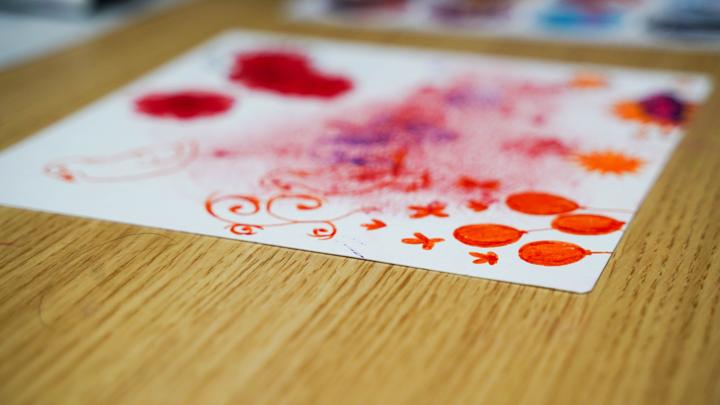
The stamps and mark making techniques produced cognition maps as part of the workshop exercises. Each participant made them in a unique way. Rather than collect and document them for myself, I allowed the participants to keep them. On returning for a third workshop, Alex and several participants told me that a number of them had kept their cognition maps as aide-mémoires to remind them that they had spent time engaging with the shape of their cognition, and that they retained a greater sense of themselves from the maps.
See the creative artefactMark-Making Cognition
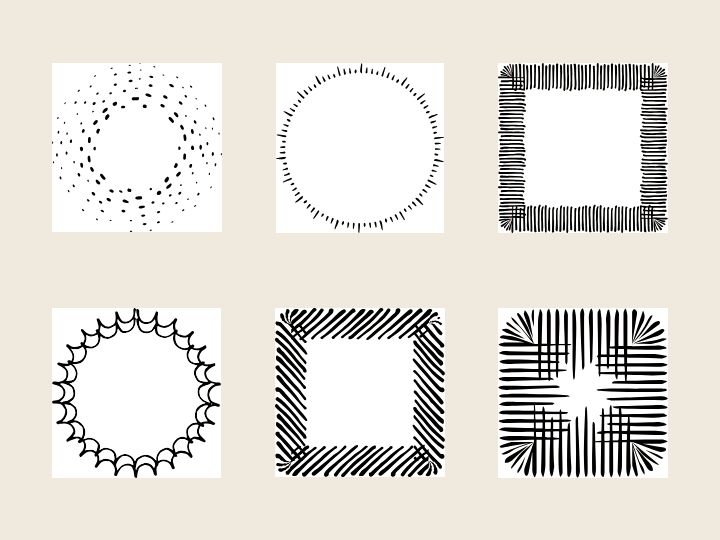
The stamp-based cognition mapping exercise: custom stamps, ink pads and a canvas, with the feelings stickers over the top.
See the creative artefactMapping Neurowiggly Cognition
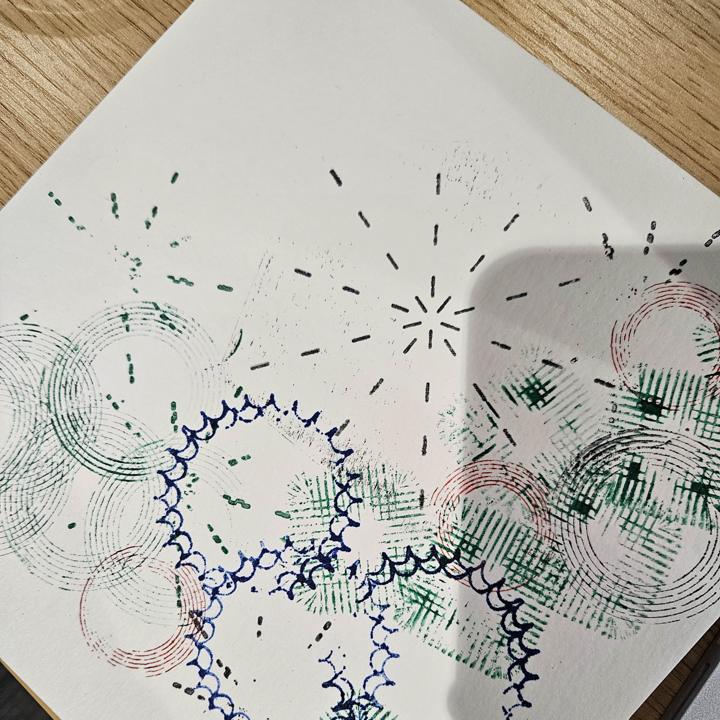
Drawing the shape of a cognition, then the extensions, tools and strategies that reach from it; a variant of the stamps and the Visualiser.
The exercise in the PlaybookVisualising Your Wiggly Cognition
5.3For the Community of Care (Space Makers: Teachers, Facilitators and Parents)
The instruments of change for the Community of Care operate at second order. From what I learned through the workshops, it is the dialogue between exercises, metaphors, structures and scaffolding that creates the wider environment in which change can take place. The community of care also creates part of that wider environment, so that friction is not foisted onto learners; facilitators shoulder some of that burden instead. What follows are the practical outputs made for this community: the SEAT framework, the Neurodiversity Playbook, and the materials and ephemera that travel with them.
5.3.1SEAT: A Framework for Change
The SEAT Framework (Surfacing, Envisaging, Actioning, Togethering) is the core structure that I developed for guiding transformative workshops. SEAT is designed to create a playful scaffold to challenge learners’ fixed habits of mind about themselves. As Chapters 2 and 3 set out, it draws from Lisa Grocott’s SEED framework (2022) in its structure and goal to “operationalise wonder”, which itself is informed by the stages of change in the transtheoretical model (Prochaska & DiClemente, 1983; Raihan & Cogburn, 2025) and Mezirow’s transformative learning theory (1997; Mezirow & Taylor, 2009). SEED is structured around Surfacing scripts, Envisaging futures, Experiencing shifts, and Driving intentions.
Two of its phases have been refined for the neurodivergent context: Surfacing narrows from broad cultural scripts to the personal, lived experience of the individual learner, and Envisaging focuses from plural open futures to a singular desired future self. The remaining two phases are substantially reconceived: “Experiencing shifts” becomes Actioning, pivoting from contemplative processing toward practical, agency-directed steps, and “Driving intentions” becomes Togethering, replacing an individualistic endpoint with a communal one. SEAT is enacted in four stages:
See the creative artefactFuture Self Letter
A letter written to the person you are becoming, kept as a commitment device.
Surfacing – This stage is about surfacing the existing stories that we tell ourselves, understanding what the tacit barriers and wider strengths of the status quo currently are, and helping position learners and their sense of self in the context of their cognition. It also allows learners to declare what instruments of change they currently utilise and establish that self-extension can improve and is responsive to their experience. Surfacing exercises probe beyond what learners say, to what they think and do (Sanders & Stappers, 2012). The gentleness of this probing matters: the territory is sensitive, and learners carrying years of deficit messaging may not easily open up to interrogation.
Envisaging – This stage is a futuring stage, imagining preferred post-human worlds the neurodivergent learners can inhabit through the adoption of new instruments of change. This encourages imagination and is an iterative, expansionary stage designed to unpack new possibilities without practical or specific personal considerations getting in the way: ideas often remain abstract and open. In practice this stage has been scaffolded through exercises like the “In a world where...” prompt, which invites participants to envision radically improved futures in which perceived deficits read as strengths.
Actioning – This stage is about introducing specific instruments of change and practising their use in such a way that they can be taken out of the workshop environment and used by the participant out in the world, acting as a boundary object between their mind and the shifts that the workshops try to enact as well as the forms of extended cognition that are enabled when they use the instruments of change.
Togethering – This is the relational work of doing and reflecting with others. It is a submergent condition that runs through the other three stages and is the relational glue that sustains change, encourages lasting uptake, and fosters the development of community. This stage explicitly builds on the idea of learning as a relational, embodied, and collaborative act, moving from individual reflection to collective sense-making.
The Situated Lineage of SEAT
[THEORETICAL GROUNDING] In situating the SEAT framework, citing distant educational theorists alone is insufficient; I would like also to acknowledge the immediate, tactile intellectual ancestry, or, as Lisa has guided me toward, the whakapapa of the design practice itself. The framework evolved through a Community of Care and practice-led inquiry within the WonderLab. Just as the framework seeks to scaffold neurodivergent learning, it is itself scaffolded by the conceptual innovations of my peers: it draws upon Dion Tuckwell’s (2020) exploration of joining, Delaram Garoussi’s articulation of belonging, Myfanwy Doughty’s (2025) work on institutional critique and submerged conditions and Ricardo Dutra Goncalves’s (2023) awareness-based design in making intangible experiences visible. These ideas fold over one another, creating a lineage of thought that prioritises the relational and the transformative over the instructional.
Togethering
Unlike Jack Mezirow’s (1991) sequential ten steps of transformation, which align with linear educational norms, a design-led approach to transformation is often iterative and responsive. Togethering is a submergent condition (Bateson, 2016) that must be actively made and designed for, involving co-discovery and collective sense-making. While the facilitator may initially hold more contextual knowledge, when that role transitions to peers with little power distance between them, the capacity to take up the mantle of transformation is greater. When the knowledgeable other is a peer rather than an authority, as bell hooks’ (1994) engaged pedagogy and Lave and Wenger’s (1991) communities of practice both hold, the relational conditions for transformation become more fertile.
5.3.2The Neurodiversity Playbook
The Neurodiversity Playbook is a comprehensive guide for running playful pluriversal co-learning workshops that aid learners’ extended cognition and deepen self-awareness. The structure is inspired by Linda Booth Sweeney and Dennis Meadows’s (2001) Systems Thinking Playbook and Matter-Mind Studio’s A Lookbook for Emotion-Centred Design (Tong & Diatta, 2018). The playbook is an interactive web app and physically a deck of cards rather than a bound manual: one exercise, interlude, or resource per card, with planning guidance on one face and delivery guidance on the other, detailed under Exercise Cards below. This card format makes the playbook adaptable, divisible, modular and immediately usable across contexts. Facilitators can mix, match and scale activities to cohort needs. Individual elements can be adapted for reuse or, using SEAT as a framework for structuring a workshop, be re-dealt into virtually any possible order, depending on circumstance. The playbook contains:
See the creative artefactExercise cards
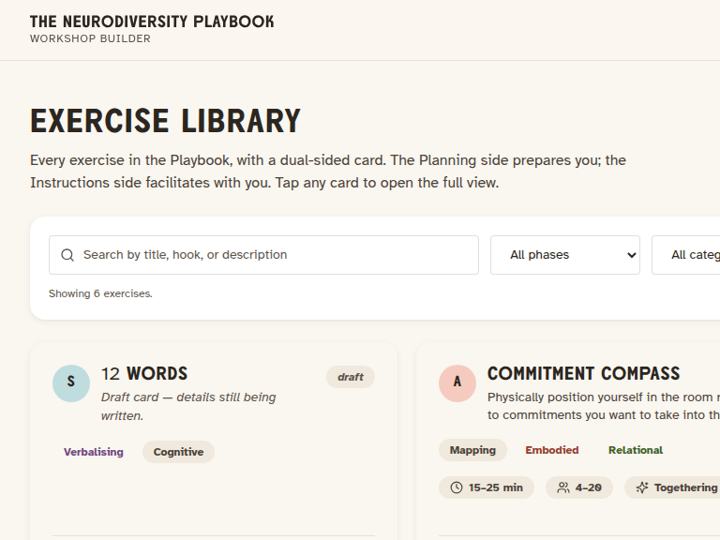
One exercise, interlude or resource per card, each with a planning side and a delivery side.
Facilitator Moves and Gestures
Particular turns of phrase, and details in the design of the materials, smooth out an exercise’s introduction. To make these replicable, each exercise card has short priming scripts and prompts to help situate an exercise. These facilitation gestures can make a large difference in the accessibility and uptake of an exercise.
Care is enacted through details like the tone of voice, the quality of materials, the responsiveness to a participant’s hesitation; attunement to these collective sensibilities constitutes the core of the pedagogical practice. I discussed in Chapter Four how participants valued the quality of the materials and how they communicated dignity and respect to participants who distrust formal organisations; one participant directly noted how they read the scenario cards’ visual richness as encouragement to engage.
See the creative artefactFabled extension cards
Cards for imagining situations and the extensions that might meet them, used in the scenario matching exercise.
By providing specific guidance on these subtle, facilitative actions, the playbook aims to cultivate a neuro-affirming environment that fosters engagement and inclusivity. The playful learning literature arrives at a kindred position. Kim Holflod’s (2022a, 2022b) studies of playful learning across higher education locate much of its value in relational qualities, trustful collaboration and affective-experiential processes rather than in activities alone, and recent work from the same research program shows playful approaches widening who participates in a classroom and how (Jørgensen et al., 2025). Pulling on the attributes of playful learning, the playbook aids the facilitator by breadcrumbing many relational conditions, to turn potential barriers into pluriversal and improvisational pathways for participation and learning.
Quotes, Stories and Framing Statements
Before each exercise, narrative and theoretical snippets position learners within a wider intellectual and historical context. Why that framing matters, and what happened without it, is discussed in Chapter 6.
How do quotes and stories expand the field of discussion? Introductions, quotes, and stories can go beyond context and work as a deliberate pedagogical move to situate the learners’ personal experiences within a wider world of ideas, history, and community, preventing the learning from becoming purely internal and self-referential. Quotes and stories are chosen to propagate a sense that participants come to feel part of the wider world without standing at its centre, Biesta’s (2021) truly eccentric learner, at home in a world that exceeds them (Arendt, 1994; Biesta, 2016). It is a device I have used in the workshops and in this exegesis alike, allowing the full force of human experience to be acknowledged inside the microcosm of this single learning environment.
Play Interludes
Play interludes are the interstitial activities that sit between the major surfacing, envisaging, and actioning exercises of the Neuroformer workshops. They’re extremely adaptable, and while some are directed to prime the next exercise, others exist entirely to be pleasurable experiences in and of themselves. They are designed to offer back to the learner the freedom that play can afford (Skovbjerg et al., 2024). Play as a theoretical device can lower the friction of handling the “disorienting dilemma” of transformation (Mezirow, 1991), where novelty and change, because of their disjuncture with past experiences, can be rocky to navigate.
See the creative artefactPlay interludes
Play between the exercises: fast bursts that shift the room's register, and quieter interludes that let it settle.
See the creative artefactThe Neuroformer Workshop Series
Three workshops with neurodivergent young people at Youth Inc in Adelaide, where both communities met; the materials are photographed on the outputs page.
Examples from the Neuroformer series include Kitty Wants a Corner and 1, 2, 3, fast bursts of play that shift the room’s register between heavier provocations; quieter interludes worked through objects, a puzzle box passed from hand to hand, the Columbus egg spun and marvelled at, a rattleback doing its stubborn physics on the table. The interludes threaded between this exegesis’s fits and chapters try to use the same device in written form: interstitial shifts of register, placed so that you can breathe between denser passages, modelling on the page the priming and pacing work the play interludes perform during a workshop. Reading an exegesis is a long encounter too, and I have tried to design it like one.
See the creative artefactRattleback
Spins smoothly one way and, spun the other, wobbles and reverts. A 3D-printable file is on the outputs page.
See the creative artefactColumbus Egg
A spheroid that, spun quickly, lifts itself upright. A 3D-printable file is on the outputs page.
There is also politics at play here; playful moments are used as an emancipatory intervention (Bennett, 1979; Hirsh-Pasek & Golinkoff, 2008). They can disrupt normative expectations of academic seriousness and productivity, by creating a space where different ways of being are celebrated. Play can also encourage people to engage deeply and for longer (Christiansen, 2022). While play and the positive effects that come with it are critical for creating psychologically safe spaces that scaffold change, playfulness comes with the risk of participants feeling infantilised. Although adults can and do play very often, play itself is often viewed as a childish endeavour (Christiansen, 2022). Framing and priming unstick some of these challenges, along with open environments for comment and critique fostered through collaborative, relational sensibilities.
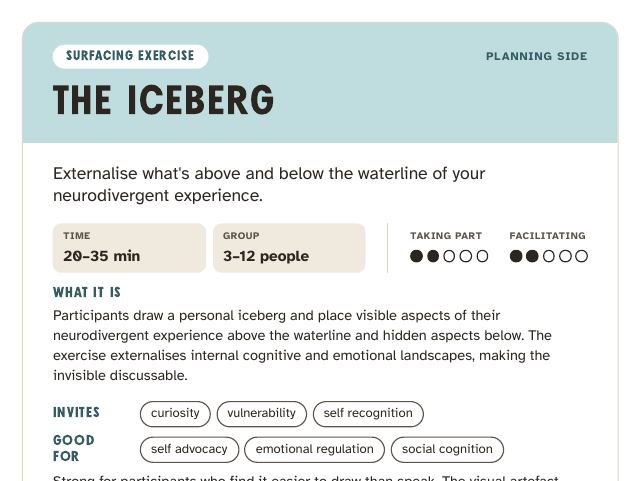
Exercise Cards
Exercise cards are the main exercises I developed or collected to speak to one or more of the SEAT framework stages. They can take a variety of forms including discussion, embodied playful games, mapping and card sorting activities or open mark making sessions.
See the creative artefactMark-Making Cognition
The stamp-based cognition mapping exercise: custom stamps, ink pads and a canvas, with the feelings stickers over the top.
Each exercise exists as a card with two sides:
The Planning side – This side provides detail that can aid the facilitator in selecting an exercise, such as what psychological shifts it cultivates with participants, what cohorts it tends to work best with, what other exercises it pairs well with and any other details to consider when selecting it.
The Delivery side – The delivery side provides direct instructions on how you might introduce the exercise to the participants, what materials, physical space and time you need to run the exercise. It also contains supplementary notes such as where to cut it short if you’re running over time, or how variants can be used to reduce sensory overwhelm.
5.3.3Materials and Ephemera
The workshop ‘materials’ are seen here from the facilitator’s side: how they are stored, staged and handed over in order to best support the participants. They act as cognitive partners, designed to actively enable learners to physically and visually transgress current self-perspectives and explore complex new ideas about themselves. Playfulness, wonder and novelty guided their design. The materials were designed to communicate care in their materiality (Diatta, 2015; Norman, 2004), a principle that was reinforced through conversations in the workshops. The use of these materials in practice has helped me realise the socio-material quality of designed creative artefacts as part of wider conceptual inquiries. I wanted the experience to feel otherwise, a landscape of possibility opening up. Here are three illustrations of these materials in practice:
Digital Twins of Workshops
In Miro and subsequently other custom websites, I could engage in digital space making. Used alongside physical cards it made a hybrid space, merging the accessibility of digital tools with the tactility of physical materials, and a visual overview of a whole workshop, exercises and materials in one place that facilitators can use to read its shape.
See the creative artefactMiro digital twins
Digital twins of the workshops, used alongside the physical cards to make a hybrid space.
Tiffin Tins
I stored and presented many of my workshop materials in tiffin tins. In the workshops they became a pacing and care device for learning encounters: I could progressively uncover the materials, one at a time, slowly expanding the complexity of the workshop once people have become accustomed to what had come before. Usefully, this also maintained novelty both for me as the facilitator and for the participants to enjoy a shot of something new once every 10-15 minutes. This ability to pace out the participants’ responses to each object inspired some of the playbook’s staging guidance.
See the creative artefactTiffin tin staging
Workshop materials staged in tiffin tins and revealed one tier at a time.
Exercise cards indicate what to reveal when; material lists are ordered by moment of use; facilitator notes suggest keeping later materials out of sight so that novelty and complexity arrive at the group’s pace rather than all at once. Notably, a facilitator does not need my tins: any container, box, bag, or vessel can perform the same choreography of delight.
Playing with expected and unexpected materials
My aim for the materials was for them to be either known in playful contexts or entirely unexpected. Materials that are familiar from playful contexts, like, playing cards, stickers, stamps, arrive carrying an existing register of low-stakes pleasure. Materials that are entirely unfamiliar, tiffin tins, rattlebacks, arrive carrying nothing at all, and curiosity fills the gap. What I could not risk was the territory in between: worksheets, laminated sheets, the formats of the classroom, which arrive pre-loaded with deficit histories.
Many of the cards were poker-sized because that is the size our hands already know from card games and magic tricks: a deck deals, shuffles and invites turn-taking as an A4 sheet never will, and the multi-modality of the cards begins working the moment someone picks one up. Irregular sizes did related work; the cognition-mapping canvases of Chapter 4 were rounded pieces of thick off-white cardstock, familiar as mark-making materials rather than classroom worksheets, on the hunch that divergent minds are primed by divergent forms.
5.4Conclusion
The creative outputs described above from the database to the puzzle boxes, from the Playbook to the feeling stickers, are the “hazard”, designed to be made and remade by neurodivergent communities and those who care for them. These outputs fulfil a central purpose of this research program, to effectively develop and model practicable scaffolds for mindset shift and the adoption of instruments of transformed learning, let’s now explore how this inquiry might offer a contribution to new knowledge.
See the creative artefactFeelings stickers
Round stickers, each carrying a feeling word in its design, used in the room and kept afterwards. They are also offered in the margin of this edition.
See the creative artefactJapanese puzzle boxes
Boxes that look alike from the outside and open by different methods: a metaphor for invisible difference.
Interlude beginsInterlude 6: Tao Te Ching, Lao Tzu
“The five colors blind man’s eyes.
The five notes deafen his ears.”
Lao-tzu’s Tao Te Ching (1977, p. 20)
If you force cognition into strict categories, you can limit your discussion of how cognition operates in real contexts. The capacities and variation of the mind are infinite, and it is only in accepting this that you can see the true scale of it.
Interlude ends