In which the significance of contributions is elucidated, and next steps are expanded upon.
7.1Introduction
This document and the wider creative practice it describes, has tried to capture a realisation that so many people, both neurodivergent members of our community and educators, technologists, researchers, parents, friends, and family in the community of care, know to be true: that change is on the way. That as we become more connected, we might become more open. As technologies mature, they might emancipate rather than constrain. That as educational systems grow older, they might become wiser to the pluriversal landscape of potential that exists inside the mind of every neurodivergent learner they meet.
This work has offered a series of suggestions that have grown from praxis. This conclusion is not exhaustive or meant to act as a final resolution to the needs of the communities this project has pledged to serve. Rather, it sets out to discuss what this project sought to know, what we know now, and what might be next in terms of increasing the future impact, accessibility, and distribution of the kinds of changes this project argues neurodivergent learners are in need of.
7.2Conclusion
7.2.1What the Practice-informed Research Surfaced
Participants shifted their use of language and the content of their reflections from externalised, deficit-based language towards a social, relational, and posthuman framing. At the beginning of a workshop series, learners would often describe their cognition using static, diagnostic terms borrowed from clinical encounters. For example, one participant located their struggle squarely in a broken internal capacity, reflecting that, before diagnosis, they consistently made sense of their experience as “thinking that I was broken” and “just drowning in everything” rather than questioning the environments and supports around them.
By the later sessions, many were discussing where their cognition was extending rather than where it was broken. One learner, for instance, described art-making and “mark making” as a deliberate cognitive strategy: that lets them remain grounded and remain “contributing, even if I don’t really process everything that’s coming at me” in overwhelming group situations. They framed aesthetic work, doodling, and collage as habits that “give me a foundation to build off… even in uncertain circumstances,” repositioning crafting as part of an extended cognitive system rather than a symptom of inattention.
See the creative artefactMark-Making Cognition
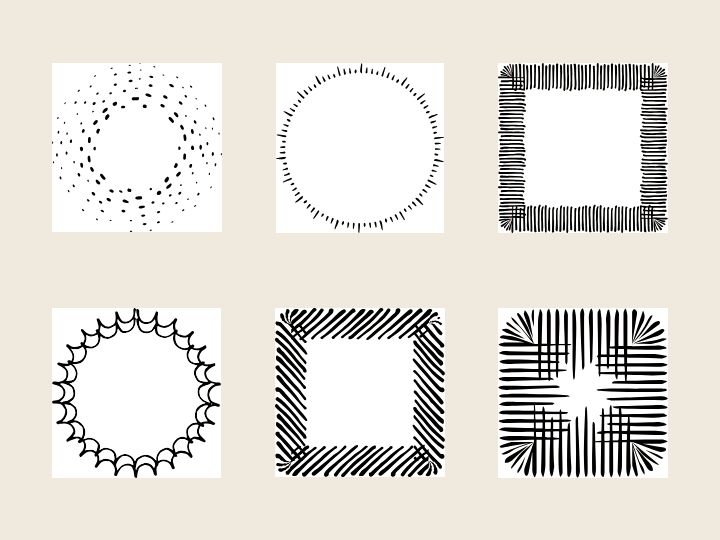
The stamp-based cognition mapping exercise: custom stamps, ink pads and a canvas, with the feelings stickers over the top.
I learned that the SEAT framework can support and scaffold this shift; Chapter 5 sets out each of its four moves. When the environment was scaffolded in this way, a form of emergent, connectivist, transformational learning appeared to take place through these deep interactions.
See the creative artefactThe SEAT framework
Surfacing, Envisaging, Actioning, Togethering: the structuring logic of the Playbook and its workshop builder.
See SEAT in the PlaybookSEAT in actionBuild a workshop with it
Evaluating mindset shifts is inherently difficult. Rather than conducting a durational study that treats neurodivergent individuals as research subjects, this PhD prioritised iterating and learning alongside participants. Consequently, this research surfaces their stories of mindset shift, focusing on what emerges when we design spaces for transformation.
This work does not claim that the workshops themselves directly produced transformation. Rather, it suggests they created conditions that supported participants to hold excitement and difficulty simultaneously. It is this holding, this psychological flexibility, that invoked an openness to explore new self-conceptions and instruments of change, seeding the potential for neurodivergent learners to shift how they navigate their world. Nor do I claim the workshops were smooth or free of tension. Chapter 4 records the misfires alongside the swans: an exercise received as infantilising, framing that arrived too thin in the first session, timing that ran long, and moments where surfacing pain required a different touch. These hard lessons helped make visible the precise conditions a facilitator taking up the playbook must attend to.
See the creative artefactThe Neurodiversity Playbook
Exercises, materials and a workshop builder for the community of care, structured by SEAT.
The outputs go on generating knowledge in use, as Chapter 5 argued: each adoption and adaptation is new evidence of how mindset shift can be scaffolded, and of what neurodivergent learners actually take up when conditions allow. By baking design principles into the artefacts, the contributions can be adopted by other practitioners independently of my direct involvement. Figure 3.5 restates the questions and the contributions that answer them in a single view.
7.3What’s Next: Invitations for Future inquiry
This section names the inquiries this project now makes possible. There are a number of directions this work points. I offer a few scenarios in different disciplinary lenses, which I am particularly excited to see unfold:
This PhD began before the crest of the current wave of generative artificial intelligence. This deluge reshaped how we think about cognition, learning and technology, and the expanse it opens for neurodivergent learners. The contribution this exegesis can make to it is a critical perspective that refuses techno-determinism in either direction: systems built to absorb human activity will fail the convivial test however capable they become, while systems built to stretch cognition inside a learner-chosen zone of proximal extension could become the most intimate instruments of change yet. I have been writing on and hoping for a rosy version of our AI infused future for some time (Gurling & Barlock, 2020). However, which future arrives is in no small part a design and governance question, and the principles this research offers, learner-set standards, legible intent and pluriversal adaptation, are the tests such systems should be held to. Whether current systems reflect predominantly neurotypical patterns of language and thought, as disability-studies critiques of AI would predict (Whittaker et al., 2019; Bennett & Keyes, 2020), is an empirical question to which this research has no answer.
What can be said is that the systematic underrepresentation of neurodivergent knowledge in traditional educational structures means neurodivergent ways of thinking, precisely because they have not been fully documented, retain a novelty and divergence that may prove increasingly valuable in a landscape saturated by machine-generated pattern recognition. This is a direction rather than a finding, and I am personally excited to pursue it next. The optimism of this exegesis, its insistence that as we become more connected, we might become more open, needs to be held with care. Connection is not inherently emancipatory, and technologies that promise to expand cognition can just as easily constrain it. Future work on AI and neurodivergent learning will need to navigate that tension directly.
Driven by regular requests from teachers, parents, and educators seeking to adapt these materials, a pressing consideration going forward is how to place these tools directly into the hands of the communities it seeks to serve. The central tension point for sharing at scale is preserving situated pluriversality: while traditional models achieve reach through standardisation, this work advocates for bespoke and customised interventions. In social innovation research, Tatiana Fraser (2023) distinguishes between scaling out, or geographic replication, and scaling deep, a relational model that attends to the cultural roots, mindsets and relationships that allow for sustained, transformative change. This aligns directly with WonderLab’s commitment to designing for social impact, which carefully negotiates how research is handed over to the community of care so they can scaffold meaningful change alongside the community of experience.
Rather than offering a top-down intervention, the online database, modular Playbook, and adaptable kits allow tools to be taken up, remade, and embodied locally without the researcher present. Together with the ambassadorial logic of Chapter 6, these outputs point toward scale not as the wide distribution of a fixed program, but as a proliferation of situated adaptations that transform culture from within. Crucially, this opens further empirical questions regarding how psychological safety travels with a kit, how fidelity to core principles is maintained through community appropriation, and how such grassroots efforts are resourced. While meaningfully scaling deep extends beyond the scope of a PhD, my ongoing commitment through WonderLab to support both communities makes addressing this demand an immediate priority.
The project opens lines of inquiry across several disciplines. In inclusive education, researchers could test the SEAT framework with new cohorts such as non-verbal autistic learners or those navigating co-occurring physical and mental health difficulties, reconfiguring exercises to meet their specific needs. Technologists could examine how the boundary before uptake operates during assistive technology onboarding, designing introduction processes that account for a learner’s affective and narrative relationship to their cognition rather than focusing solely on the functional interface. Design researchers could isolate individual instrument domains to explore strengths-based digital prosthetics or apply this logic of space-making to architectural design in classrooms and workplaces. Finally, educational researchers interested in democratic pedagogies could investigate how the horizontal, non-hierarchical learning environments created here might operate and be sustained at institutional scale.
7.4The Stilts
You may remember that this exegesis began with a story. A teacher asked what could be done about me being too short. My answer was one word: stilts.
Two things happened in that moment that prefigure what this exegesis has tried to do. The first was an act of imagination. I imagined myself as more than I was, took a conceptual leap, and validated my own capacity to grow, to be autonomous, to transform. The second was a call to create something, to design and adopt an external entity, an extension, that would help me extend my capacity. The prerequisite to actually putting on the stilts was the belief that I was capable of wearing them in the first place. That limitation was an example of a prescribed, defined, and enforced limitation from outside, bound up in societal norms and neurotypical matrices that continue to shape educational life. The stilts story is the social model of disability in miniature: it is society, not the child, that constructs the barrier.
What I have come to understand, and what the stilts story already contains if you look closely, is that excitement and difficulty are not necessarily sequential. They might be simultaneous. The child who imagines being taller is also the child who has been told they are too short. Both things can be true at the same time: the capacity to hold excitement about what cognition might become alongside an honest recognition of the friction it currently encounters. It is not about clearing one boundary and arriving cleanly at the next. It is about learning to hold both, and discovering that the holding itself is where transformation begins.
This exegesis positions itself in the space between self-belief and the instruments we use to lower the friction of navigating learning and the world. There is no absence of emancipatory potential in neurodivergent learners, and there is certainly no shortage of tools; rather, what I have learned and often experienced through this research is a gap in uptake. Our limiting mindsets hinder adoption through cycles of shame and self-critique, alongside a limited awareness of what exists and what it might feel like to be helped by these things. This exegesis argues that self-belief comes alongside extension, that the imagination of a different self, acts in concert with the instruments of change that enable it, and that adopting these instruments creates the enabling conditions for new self-perceptions. It is cyclical. It does not resolve.
This work has tried to demonstrate that it is possible to scaffold not only extensions through improved interfaces, but environments and encounters that increase readiness to use those methods. It is for everyone who has ever imagined that they could be more than they were told they could be. It is for the learners who were told their cognition was a deficit and discovered that it was a landscape worthy of exploration. It is for the facilitators who knew something was possible but did not have a framework or the time to name it, and perhaps now they can.
These ideas, extensions, instruments of change, tools and strategies can continue to grow, be adapted by others, and contribute to creating more playful and equitable learning environments. This conclusion is not a final resolution. It is the beginning of a discussion about what more joyful, posthuman, creative, transformational learning environments for neurodivergent learners might look like.
To you, the reader, remember one thing: both you and I can be as tall as we want to be.
Interlude beginsInterlude 9: The Bone People, Keri Hulme
‘They were nothing more than people, by themselves. Even paired, any pairing, they would have been nothing more than people by themselves.
But all together, they have become the heart and muscles and mind of something perilous and new, something strange and growing and great.
Together, all together, they are the instruments of change.’
Keri Hulme, The Bone People (1984)
Note: This is a quote from Lisa’s favourite book that she shared with me only a few days before completing this exegesis. I think it lines up quite well, don’t you?
Interlude ends